
Stay Healthy

Sickness is one of those life events that happens to everyone.

And sickness usually comes at the most inopportune times.

Because sickness happens to us all, we have been conditioned to believe it is inevitable.

But is it really inevitable?

Yes, it is.

Well, no, it’s not.

Granted, we all get ill a few times in our lives, therefore, it might seem inevitable.

But sickness is not inevitable.

In all honesty, I am a living testimony: I have never been ill since 2007 when I discovered healthy living.

I have not even caught the flu.

No kidding, I honestly don’t know what the flu is.

In 2007, I had my first heart surgery.

From 2007 till 2018 when I had a follow up surgery, I have never had any other form of illness.

Again, not even the flu and not even coronavirus.

My Road to Healthy Living

I came home from work one day in 2007 and started feeling unwell.

Thinking it might be because I had not gone to the gym for a long time, I kitted up and went to the gym.

After my gym session, I felt worse.

My temperature shot up and I started shivering uncontrollably.

My partner freaked out and called the ambulance.

I was rushed to the hospital where I was diagnosed with an infection of the heart valve.

A corrective surgery was conducted to replace the infected heart valve.

I might have left you with the impression that that I went to the hospital and I heart was sorted within twenty-four hours.

Nothing could be further from the truth.

I spent two and a half months in the hospital and still had to attend the hospital every day for another two weeks to complete my antibiotic therapy.

After that experience, I promised myself I would do everything within my power to avoid ever getting myself in such a situation.

I started researching and discovered there were lifestyle changes I could make that would prevent me from ever ending up in a hospital again.


Making Live Changes

boy thinking over a healthy snack or a dessert

I started making those lifestyle changes.

Here I am almost twelve years later, I have never entered a hospital except for a check up.

Why You Should Stay Healthy

After the surgery, when I gained consciousness, I gestured to the nurse to remove the breathing tube from my mouth.

He asked me to wait for half an hour.

After what I thought was half an hour later, I gestured to him again.

He refused.

When the surgeon came to see me, I gestured to the surgeon that I wanted it removed. He instructed the nurse to remove it.

The nurse, believing I had undermined his authority by asking the surgeon, became angry, and sought to forcefully remove the tube.

The next thing I remember was people rushing around me.

When I finally regained consciousness, it dawned on me that he almost killed me.

It was then that I realised how dangerous hospitals were.

Previous to this experience, I had repeatedly heard about medical errors.

You will not realise how dangerous a medical facility can be until you have had an experiential encounter.

Granted medics save lots of lives.

In the same token, medics cost lots of lives.

It’s more dangerous to be under the surgeon’s knife than to speed two hundred miles an hour on the motorway.

Just food for thought.

The next time you choose to engage in any action that would impact your health, remember this story.

How to Live a Healthy Lifestyle

There is a direct link between health and health related behaviour.

They include LESP:

  • Living diet
  • Emotional intelligence
  • Suitable living environment
  • Physical activity

Those are the framework of activities I live by, and they have helped me to avoid the flu for the past twelve years.

You can experience the same if you engage in similar lifestyle changes.

I will expand on those lifestyle changes further in my healthcare reform book.
Eat to Live

“He who does not know food, cannot understand the diseases of man. Let your food be your medicine and your medicine be your food.”.

Even though Hippocrates uttered those words centuries ago, they are as true today as they were then.

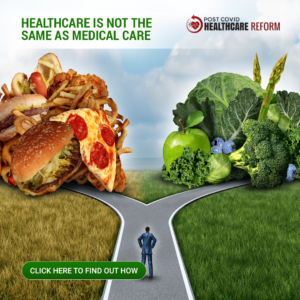
Without exception, the longest living and most healthy people in any part of the world live by eat specific types of diets.

The types of illnesses common to societies that eat conventional diets are completely alien to societies that eat living diets.

Heart disease remains the leading cause of death in many societies except in societies that eat living diets.

Why Does Living Diet Increase Your Quality of Life?

In his book entitled “The Whole Heart Solution” Dr. Joel Kahn described the functioning of the GI system, which is the first place our food lands when you swallow.

According to Dr. Kahn, the GI system is a tightly knitted tube and cell in which our gut bacteria live. Those bacteria munch upon our diets and transform them into fatty acids and vitamins.

Eating a healthy diet helps those bacteria produce fatty acids and vitamins. The exact opposite happens when we eat an unhealthy diet.

Instead of fatty acids and vitamins, unhealthy diets cause inflammation, which results in illness.

As T. McKeown MD. asserted “The nutrition of the host. The result of an encounter with a micro-organism are influenced not only by the inherited or acquired immunity of the host, but by the general state of health determined particularly, it will be suggested, by nutrition.”.

Dr. McKeown went further to say, the changes that occur when disease interacts with its host might be a reason for the decline of infectious disease.

In other words, when a disease enters your body, there is a fight between the disease and your body.

The victor in this fight depends on the strength of your immune system. And the strength of your immune system depends on your diet and lifestyle.

What Are the Best Diets For  Strong Immune System?

Japan has the highest life expectancy in the world at 87.3 years for women and 85 years for men.

And Japan has the highest ratio of centenarians (people over hundred years old) in the world, 520 for every million. The Japanese city of Okinawa has the highest life expectancy in Japan.

In their book entitled “Ikigai”, which means life’s purpose in Japanese, authors Héctor García and Francesc Miralles outlined the fact that behind the lengthened Japanese life expectancy is their diet.

According to Mr. García and Mr. Miralles, the average Okinawan food table is made of rainbow foods that include: “red peppers, carrots, spinach, cauliflower, and eggplant…vegetables, potatoes, legumes, and soy products such as tofu”.

Like most Asian cuisine, rice is the staple of their diet in addition to fish.

They eat one-third of the amount of sugar consumed nationwide and half as much salt as the rest of the country.

But most importantly, they fill up to only 80% of their gut capacity.

Notice I did not mention hamburger, steak, French fry or any of the popular western diets.

You need to realise that your diets determine your quality of life and the number of years you are likely to live.

So, think before you eat.   You could be eating medicine or poison, life or death.

Move to Live

In the previous article about living diet, I highlighted the dietary habits of Japanese who have the highest life expectancy in the world.

The Japanese city of Okinawa serves as home to people with the longest life expectancy in the world.

It is not uncommon to see seniors in their 80s and 90 roaming the streets.

Centenarian birthday celebration is as common as any other birthday celebration in Okinawa.

In addition to diet, another secret of the longevity of the Japanese is their hyper activity.

Japan as a nation moves more than any other nation. Japanese are legendary for their long work hours.

It’s not uncommon to find a treadmill under the desk of a Japanese office worker. In fact, the absence of one would be quite startling.

Hyper activity is one of the best kept secrets of the Okinawans longevity. Okinawa is the only Japanese city without a train.

The only means of transportation in the city are cars, but most people walk or cycle everywhere.

Being mobile does not necessarily mean running a marathon or sweating for an hour in the gym.

Simply walking around your block for fifteen minutes or doing what Dr. James Levine calls NEAT (non-exercise activities thermogenesis) contain the same health benefits as sweating for an hour in the gym.

In fact, spending an hour at the gym daily and proceeding to sit for eight hours has a similar health effect to not exercising.
In the late 40s and early 60s, research were conducted in the UK to ascertain the impact of sitting on bus drivers. In those days, buses had conductors who collected the fares.

The aim of the research was to investigate the cause of the rise in heart disease. The research found that bus drivers were twice as likely to die from heart disease than their conductor colleagues who climbed up to 750 steps a day.

The research was the clearest evidence of the negative impact of a sedentary lifestyle on health.

So, if the extent of your exercise is walking to your living room to watch TV, you might want to rethink that.

Long sitting, without movement, kills.

You can prevent early death by simply moving around for fifteen minutes each day.

Suffering With Mental Health?

Before my brother passed, he suffered a mental breakdown. It got so bad he was doing some stuff that would be unimaginable to some of you. Out of respect for my mother, I prefer not to reveal the specifics of his behaviour in this article.

But trust me when I say, I do understand the suffering caused by mental illness.

As you are well aware, mental illness does not only inflict pain on its sufferer, it also inflicts massive pain on their love ones.

It’s painful to see someone you have known, loved, and respected for most of your life suffer a mental breakdown.

When they do not even recognise who you are or when they utter incoherent babble.

That’s painful.

I used to have long talks with my brother. He was a vicar, so was good with words.

Even though I live in Europe, when I was down, I called him and he always encouraged me to get off the canvas and continue the fight. To see my brother who I admired reduced to insanity was painful.

He survived fourteen years of civil war.

He survived the Ebola outbreak that killed over ten thousand people.

He survived a divorce from his first wife.

Then when his second wife passed, he had a nervous breakdown.

I feel sad for him as I recount his story.

How can one individual be subjected to so much suffering in a single lifetime?

The shrink will say the death of his wife was the final straw.

Yes, but.

Why was he able to cope with fourteen years of war and still come out on the other side with all his faculties intact?

Ebola was even deadlier.

Coronavirus has shown us how deadly viruses can be.

And he was able to come out on the other side of Ebola.

In the end, it was his personal trauma that took him out.

Why Was That the Case?

I will argue, his ability to easily deal with the traumas from the war and Ebola stems from the fact that those were global incidents.


The entire country suffered from the war and was impacted by Ebola.

However, when it came to the death of his wife, it was personal.

If his wife had died during the war or from Ebola, his reaction would have been different because many people were suffering loss at the time.

My brother’s mental illness provides evidence to support the fact that mental illness,  in most instances, comes down to our assessment of the situation we face.

Expert after expert have alluded to the fact that trauma or stress happens inside of us.

Trauma is not what happens to us but our response to what happens.

As Victor Frankl wrote “Forces beyond your control can take away everything you possess except one thing, your freedom to choose how you will respond to the situation.”

Our lives are full of a series of potential stressors.

We get fired.

We fail an exam.

Our relationships fall apart.

Our pets die.

Our bosses are jerks.

Our spouses run off with their secretaries or personal trainers.

We get evicted for non-payment of rent.

These are all potential stressors and sometimes unavoidable events in our lives.

Remember, between stimulus and response there is a space. In that space, we have the choice to choose our response.

The problem is, most of the time, we either forget the fact that we have the choose our response, or we lack the skills to choose the right response.

Why don’t we assert our right to choose our response?

Faced with the war and Ebola, my brother’s perception was that it was global. Everyone in the country faced the same threat, so, it was bearable.

The death of his wife was a personal event that required personal response. Faced with the personal choice, he froze because he viewed the situation as a threat.

Accurate response to any situation depends on accurate framing.

When faced with new situations, our tendency is to frame them either as a challenge or a threat.

The challenge or threat framing situation usually determines our choice of response.

When viewed as a challenge, our attitude is, it’s a situation within our ability to handle.

In such instance, we proactively take actions that would lead us to a positive resolution.

When viewed as a threat, our attitude is: it’s a situation beyond our ability to cope.

In such instance, we do not engage in constructive response. We respond with emotionally gratifying actions as opposed to actions that lead to real resolution.

Why do we lack the requisite skills to choose the right response?

Handsome well-dressed with glass of beverage and cigar

It’s because the majority of people lack emotional intelligence.

The lack of emotional intelligence is the biggest problem we face as a society.

Because emotional intelligence is viewed as something innate, that cannot be learnt, most parents do not view it as a skill they need to teach their children.

There are seriously mentally ill people who deserve our love and support.

But there are also a large majority of people diagnosed with mental illness whose real disease is the inability to cope with the complexities of life.

To repeat the previous assertion, it’s not the events that cause trauma, it’s the response to the event.

Trauma is internal.

Trauma is not external.

The problem is, we have been conditioned to respond to events in our lives in a certain manner, so when such event occurs, the predetermined response is activated.

Anyone who does not respond to life events in the expected manner is considered a psychopath.

It’s the fear of being considered a psychopath, in addition to the conditioning,  that makes people respond to life’s events the way they do.

What needs to be made very clear is, the majority of those diagnosed with mental illness are simply people lacking the ability to deal with the complexities of life, people who respond to life events the way they have been conditioned to respond.

Except we are able to make this distinction, we will struggle to alleviate the suffering of the mentally ill.

Why Do the Mentally Ill Suffer?

There was a time when only a very tiny minority of our population were diagnosed with mental illness. During those times, the mentally ill were kept in lunatic asylums situated far away from the prying eyes of the general public.

Within a few short years, mental illness diagnosis has shot through the roof, making it impossible for the mentally ill to be locked up in asylums.

Research shows that one in four Americans and Brits have mental health issues.

If the research is to be believed, eight hundred and twenty-five thousand Americans and one hundred and seventy-one thousand Brits are mentally unstable.

With that number of mentally ill people walking the street, why is there not an epidemic of violent crime?

Either the research is wrong or the definition of mental illness is questionable.

But the key question that needs answering is: are more people becoming mentally impaired or have too many people fallen victim to the expanding definition of mental illness?

When the main character in the movie “Shakespeare in Love” was asked questions, his usual answer was “I don’t know; it’s a mystery.”.

The puzzle surrounding the rising levels of mental illness in our population needs a resolution: Are more and more people getting mentally impaired or is the definition of mental illness expanding to include ordinary everyday human suffering?

I don’t know, it’s a mystery.

But, then again, I do know; there is no real mystery.