Will The New British Government NHS Staffing Plan Work? I Don’t Think So! Part Two
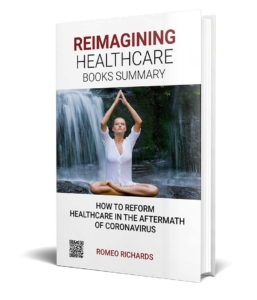
Reimagining healthcare
In my book ‘Reimagining Healthcare’, I told the story of Sarah Harding, the late UK Girls Aloud star who died following a delay in her cancer treatment.
In August 2020, Sarah announced she had been diagnosed with metastasised cancer. She revealed that when she first noticed lumps under her arms, she ignored them. However, an MRI scan was quickly scheduled for her when she visited her doctor months later.
Then, “Coronavirus hit, and everything either went into slow motion or stopped altogether,” she explained. With treatment halted because of Covid-19, Sarah’s only option was to wait and hope for the best. But when it comes to cancer, hope is not a strategy — cancer does not stop growing because of Covid-19.
When she was finally offered an appointment, the cancer had already spread to other organs of her body. It became a race against time to stop the spread and hope for a miracle. But miracles are rare in cancer country. The brutality of the treatment itself is enough to batter the body into submission.
Secondary Covid Death
How to tackle the NHS staffing crisis
I am writing about Sarah’s story because she was a mega star. But there were tens of thousands of people who died because their treatments were delayed due to Covid restrictions. The official Covid-19 death toll is approximately 15 million. However, millions of secondary deaths like Sarah’s are indirectly linked to the pandemic — even though they were not recorded as Covid-19 deaths. A woman who lost her daughter after her chemotherapy was paused on the first day of the March 2020 lockdown lamented that people like her daughter are victims no one remembers.
The number of people waiting for medical appointments in the UK has risen to over seven million. The Institute for Public Policy Research predicts it could take up to ten years to clear the backlog brought about by the pandemic.
Why was it necessary to pause the treatments of others to focus exclusively on Covid-19 patients? It might seem obvious that in emergency situations like Covid-19, every other procedure had to be deprioritised to tend to the pandemic. But with our level of sophistication, why were we unable to treat Covid-19 patients and cancer patients like Sarah? Why were medical professionals and hospital administrators forced to choose between saving Covid-19 patients and saving Sarah?
NHS Outdated Healthcare Business Model
How to tackle NHS staff shortage
Many people reading this might conclude that nothing could have been done — it was a situation forced upon us. But was that the case? Was there not something that could have been done? I guess the question worth asking is: how could this situation have happened in the 21st century with our level of technical capability?
The answers to the above questions are simple. The science of medicine has developed beyond our ability to utilise it. But the profession of medicine remains frozen in the 19th century. We could not treat Covid-19 and other patients simultaneously because we still use a 19th century medical care business model.
Today’s healthcare system was built at a time when healthcare demands were different from current needs. A century ago, constraints like transportation made general hospitals a necessity. Today, an individual can travel great distances with relative ease for medical treatment. The advancements in transportation have made general hospitals less necessary and largely undesirable in favour of specialised hospitals.
If we had specialist cancer-care hospitals, people like Sarah would have gotten their treatment. Meanwhile, general hospitals and purposely designated infectious disease hospitals would have handled Covid-19 patients.
The current healthcare business model does not benefit anyone. It does not satisfy patient needs nor the needs of medical professionals. It is an outdated system that allows patients to die unnecessarily and forces medical professionals to work until they burn out. If the British government is serious about tackling the NHS staffing shortage, it needs to focus on redesigning the current NHS business model to one that is fit for the 21st century.